

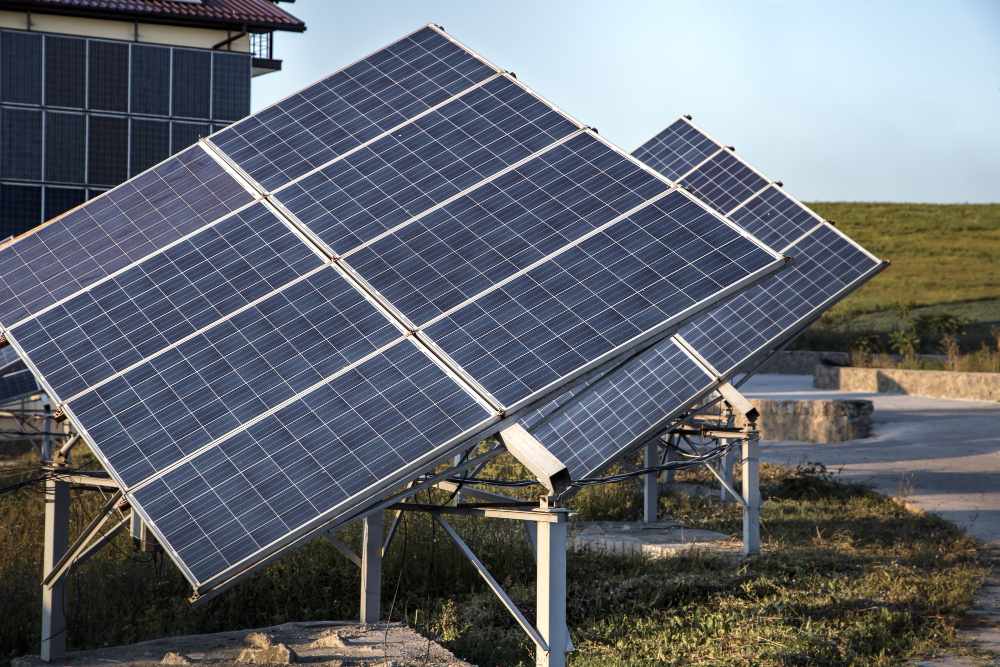
Solar panels are a clean and renewable energy source, generating electricity for your home and workplace. They are also an excellent way to save money on your energy bills. In fact, solar panels can offset your energy bills entirely or even generate enough electricity to make you self-sufficient in terms of energy.
As the name suggests, solar panel installation in Swindon involves setting up photovoltaic (PV) panels on rooftops, ground-mounted structures, or other suitable locations to harness solar energy. However, you need professional solar power installation services for this purpose
Solar Solutions Oxford dedicatedly provide solar panel installation in Swindon as a shift towards a low- or zero-carbon lifestyle by generating cleaner electricity. We bring the benefits of solar power to homes and businesses across the UK, including reduced energy bills, hassle-free maintenance, and the ability to store excess electricity for later use.
We provide comprehensive services, from solar PV installations in Swindon and maintenance to expert advice on solar panel selection and environmentally friendly energy storage systems. With our state-of-the-art equipment and expert team, we provide exceptional service, designing solar energy solutions that offer long-term power.
Solar panels, also referred to as solar PV panels or photovoltaic panels, harness the power of sunlight to generate electricity through the photovoltaic effect. This process involves converting light energy (photons) into electrical energy (voltage).
Constructed using materials that generate electrons when exposed to light, PV cells facilitate the flow of these electrons through a circuit, resulting in the production of direct current (DC). This electricity can be utilised to power various devices directly or stored in batteries for later use.
A complete photovoltaic system typically comprises one or more solar panels, an inverter responsible for converting DC electricity into alternating current (AC), and optionally includes components like controllers, meters, and trackers.
These systems serve multiple purposes, ranging from supplying electricity to off-grid locations such as remote homes or cabins, to feeding surplus electricity back into the grid, enabling users to earn credits or payments from utility companies. The latter is known as a grid-connected photovoltaic system.
In most cases, solar PV installations on homes can be done without getting permission from the local authority. This is because they are usually considered ‘permitted development’ under the law. However, there are some exceptions.
You must obtain planning permission to install solar panels on a flat roof; panels must be bent at least 0.2 metres further from the roof slope to receive sufficient sunlight, and doing so breaks the permitted development rule, which says that the system cannot extend more than 0.2 metres above the plane of the roof slope.
Other than the flat roofs, a listed building or monument cannot have solar panels installed on it without obtaining both listed buildings and planning permission. These types of properties have additional regulations and restrictions in place.
At Solar Solutions Oxford, we recognise the numerous advantages of modern solar energy solutions. We provide an extensive range of solar panels tailored to your needs.
Solar Solutions Oxford is Oxfordshire’s Solar PV specialist, We can fit solar panels with or without battery storage. Contact Us 01865 570773
At Solar Solutions Oxford, we streamline the solar energy installation process to provide you with a hassle-free experience. Although the steps involved in the process may differ, the following are typical things when inaugurating solar panels.